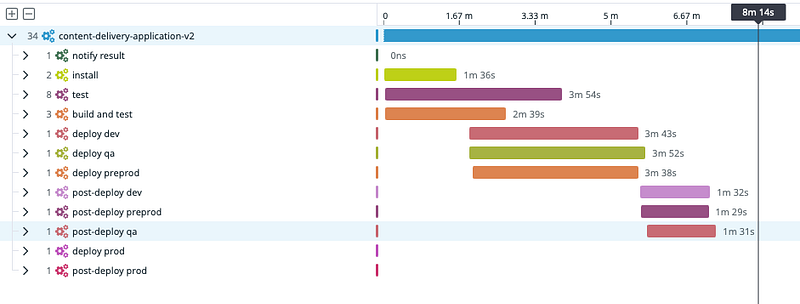
The Problem
Our CI/CD pipelines were taking 40 minutes to complete, creating a significant bottleneck for our engineering teams. This slow feedback loop was impacting developer productivity and deployment velocity across multiple teams.
Key Optimizations
We implemented several strategic optimizations to reduce pipeline execution time:
- Parallel Test Execution: Restructured test suites to run in parallel, significantly reducing overall execution time.
- Flaky Test Elimination: Identified and fixed unreliable tests that were causing unnecessary re-runs and delays.
- Dependency Caching: Implemented intelligent caching strategies for npm dependencies and build artifacts.
- Build Optimization: Optimized webpack configurations and reduced bundle sizes to speed up build processes.
- Infrastructure Improvements: Upgraded CI/CD runners and optimized resource allocation.
Results and Impact
The results exceeded our expectations:
- 66% reduction in pipeline execution time (from 40 minutes to 13 minutes)
- 50% increase in deployment frequency across 5 frontend teams
- Improved developer satisfaction with faster feedback loops
- Reduced infrastructure costs through more efficient resource usage
Lessons Learned
This project taught us the importance of:
- Regular pipeline performance monitoring and optimization
- Cross-team collaboration in identifying bottlenecks
- Investing in infrastructure improvements for long-term gains
- Maintaining test reliability to avoid unnecessary delays
For the complete technical deep-dive, including specific implementation details and code examples, check out the full article on Dunelm Engineering.